
Stone polishing

Stone, honed back,then protected.

Marble, limestone, terrazzo, travertine and granite, honed and polished with diamond pads, then sealed with an impregnator that suits the stone. We test a small area first and agree the finish with you.

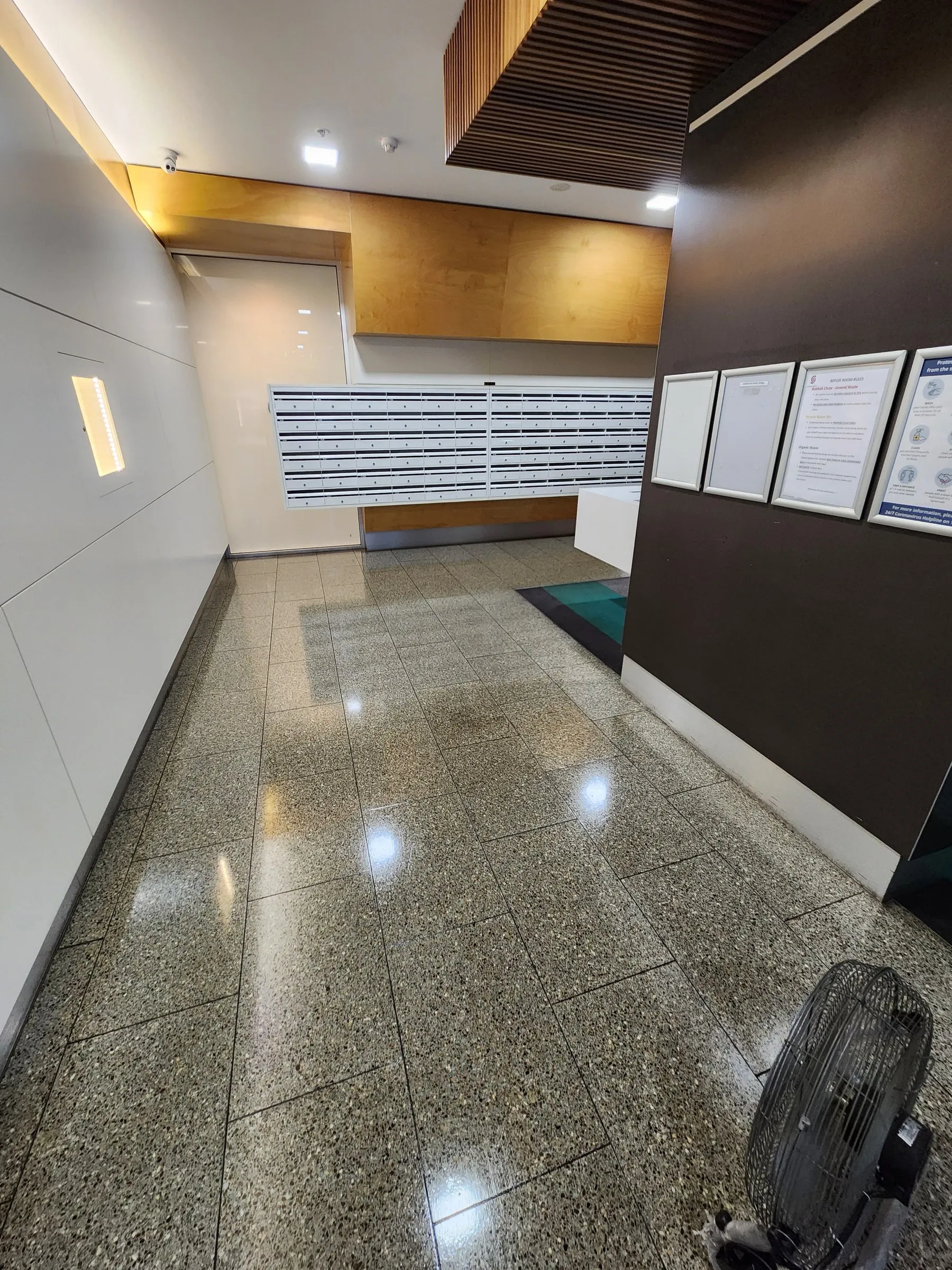
Glossy speckled terrazzo foyer with mailboxes
Stone
Marble, limestone, terrazzo, travertine, granite
Method
Diamond pads, wet, coarse to fine
Finish
Matt, satin or polished, agreed first
Proof
Test area and photos in the record

The scope

What a stone polish includes. Every time.

This is the standard job. Your scope names the stone, the finish and the sealer, so you can check the work against it.

Every stone job

  • Stone identified and a test area done
  • Furniture moved and skirtings protected
  • Deep clean with a stone-safe neutral cleaner
  • Honing and polishing with diamond pads, wet
  • Slurry picked up and the floor rinsed
  • Impregnating sealer where the stone needs it

Common schedule

  • Neutral clean and buff, entries and lobbiesMonthly
  • Light hone and polish, traffic lanesEvery 6 to 12 months
  • Full hone, polish and resealAs wear shows, often years apart

How we do it

Each stone takes its own path. The test area shows it.

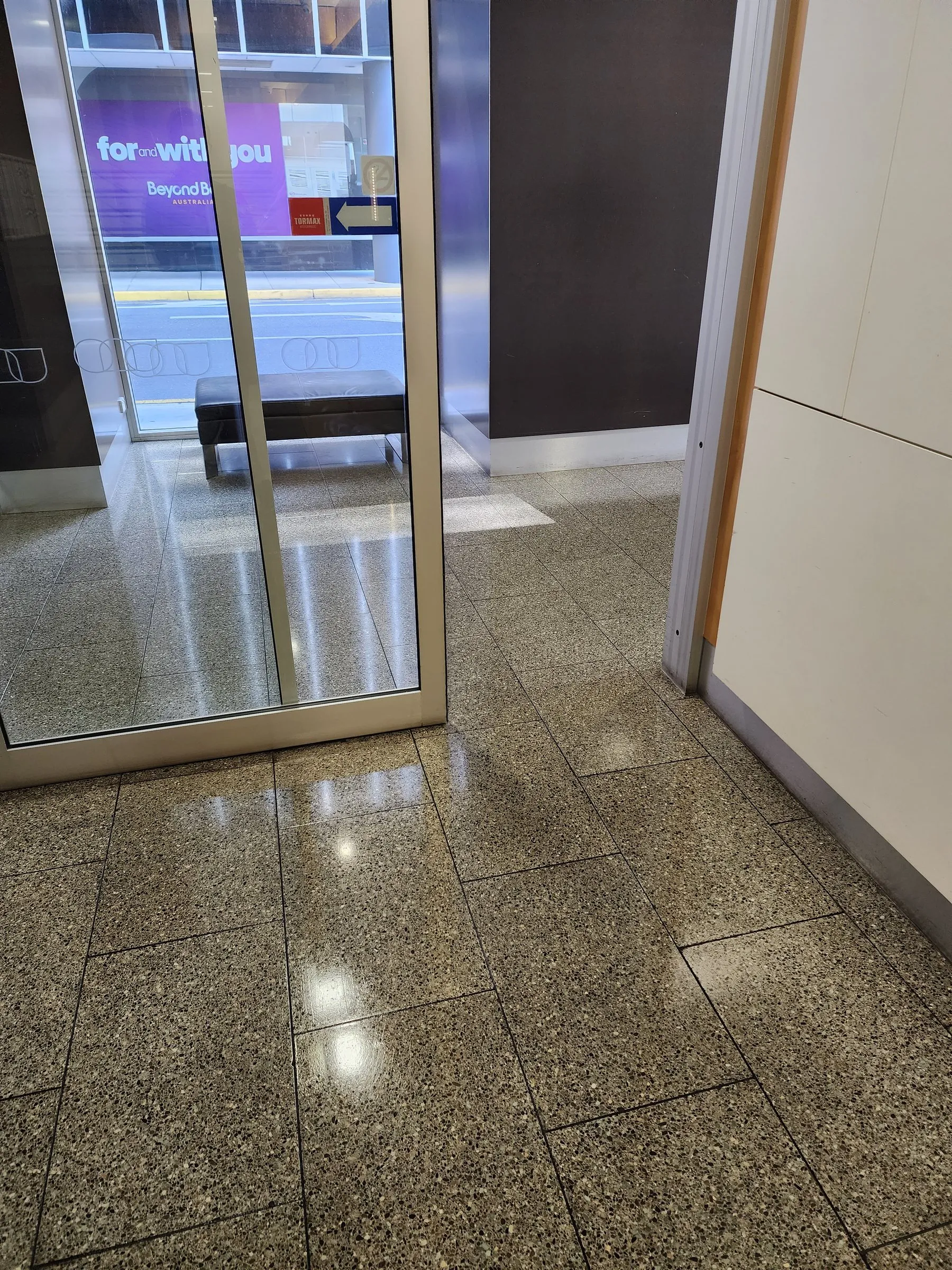
Glass shopfront entry over a terrazzo floor

Marble, limestone and terrazzo

Honed, then polished.

Diamond pads take out scratches and dull traffic lanes, working from coarse grits to fine with water to keep the dust down. Each pass is finer than the last, until the floor matches the finish agreed on the test area.
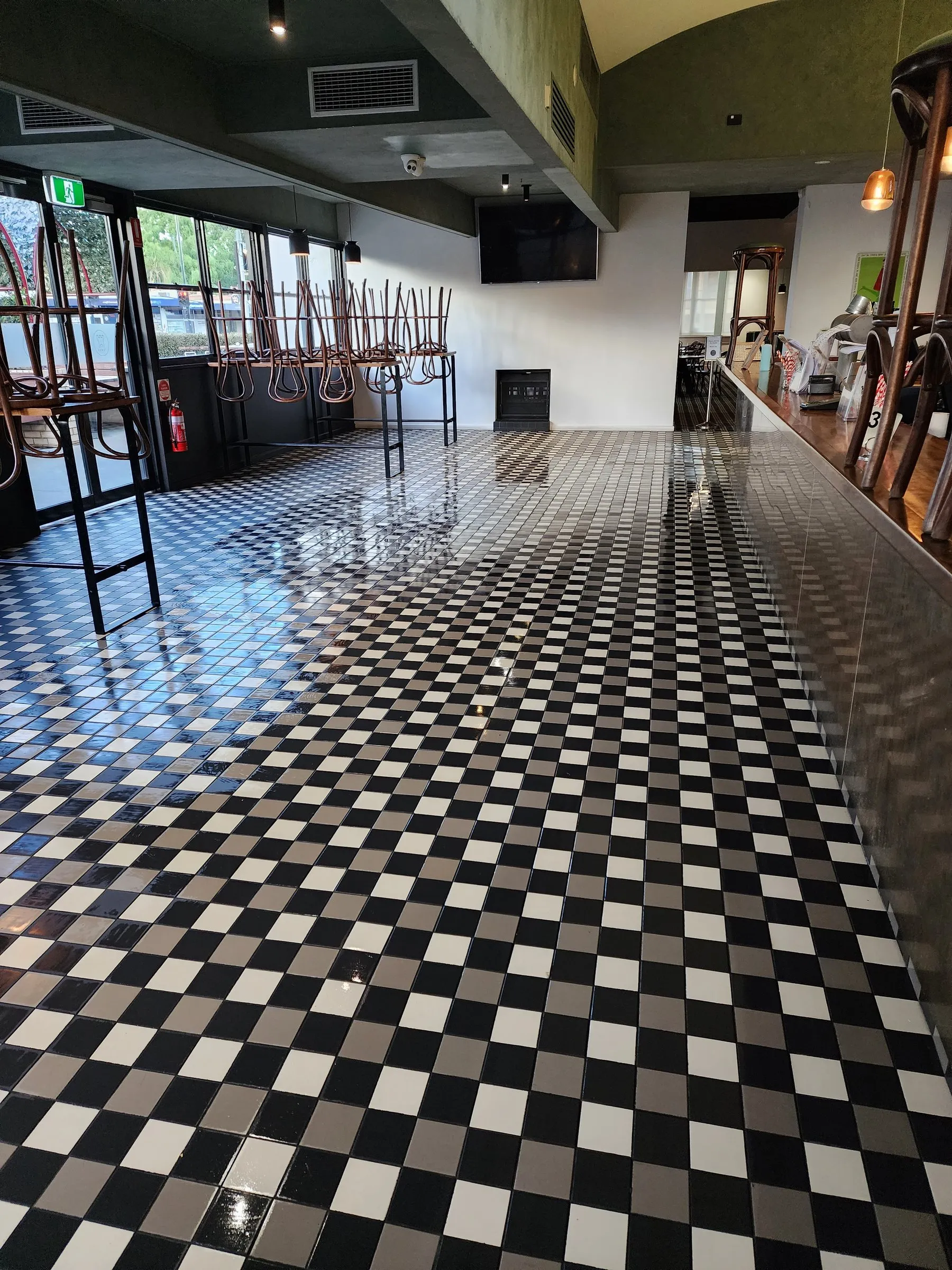
Long black-and-white checkerboard floor in a heritage pub

Travertine, granite and older floors

Filled where it's open.

Travertine has natural holes that collect dirt, so open holes are cleaned out, filled and honed flush. Granite is harder and takes more passes to lift an even shine. Heritage floors get the lightest method that works, keeping as much original surface as possible.

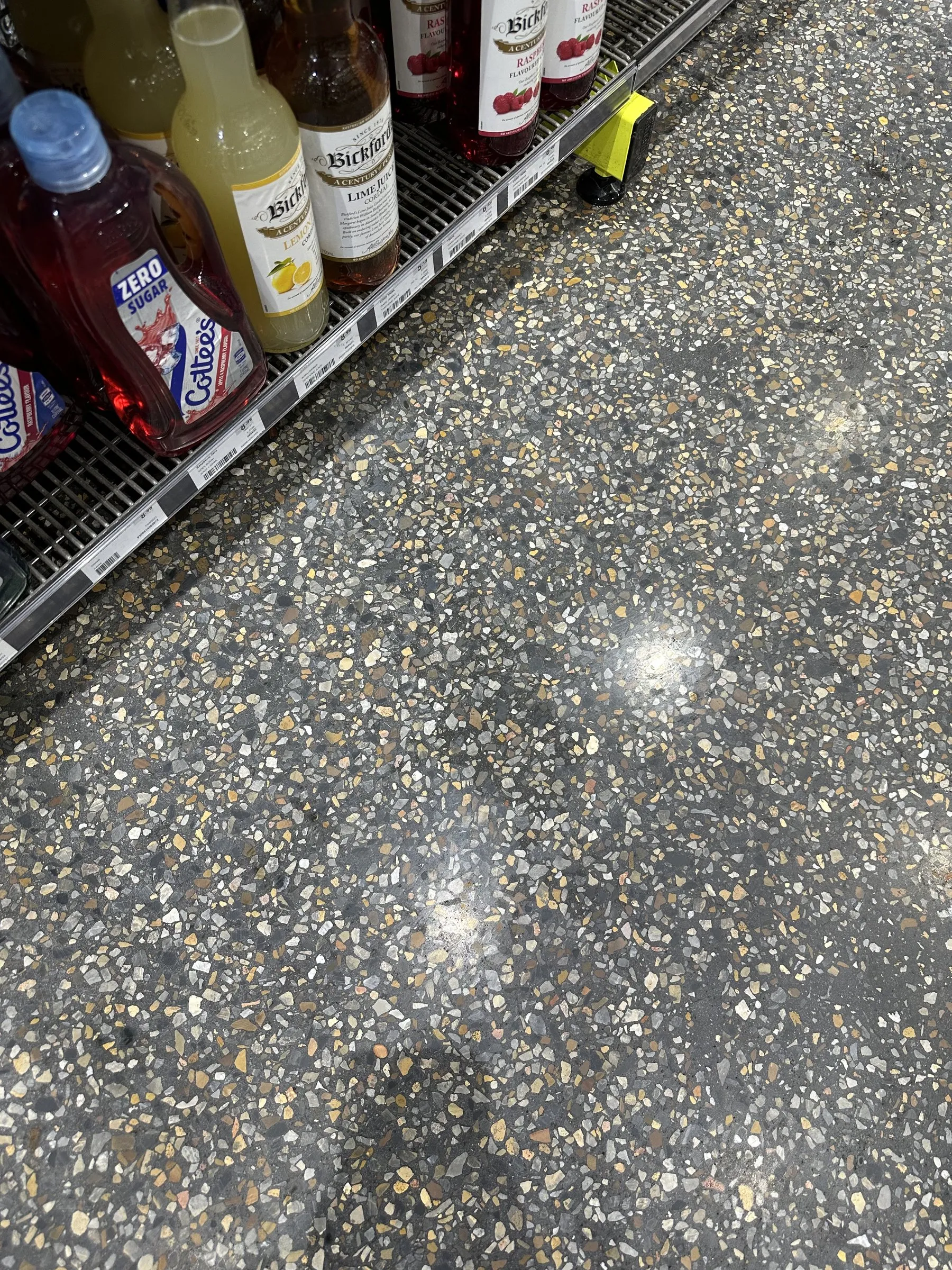
Polished aggregate floor in a food store, sauce bottles on a shelf

Sealing and daily care

Sealed inside the stone.

Most stone is sealed with a penetrating impregnator that sits in the pores rather than forming a film on top, so the floor keeps its look and its grip. Marble, limestone and travertine react to acid, so daily cleaning uses a neutral cleaner only.

Every visit, on the record.

See a visit record
  • In and out

    Time-stamped on arrival and when the visit closes.

  • Ticked

    Each area marked done against the scope you signed off.

  • Photographed

    The areas that matter, finished. Faults flagged with a photo.

Questions

Stone polishing: questions.

Can you get scratches and etch marks out of marble?

Most of them. Light scratches and dull rings from drinks or the wrong cleaner come out with honing and polishing. Deep chips and cracks are a repair rather than a polish, and some will still show afterwards. We test an area and show you the result before the full floor is done.

What should we clean our stone floor with?

A neutral, stone-safe cleaner and a clean mop. Marble, limestone, travertine and terrazzo are acid-sensitive, and vinegar, citrus and most bathroom or descaling products will etch them. Grit wears stone too, so entry mats and regular sweeping matter as much as the cleaner you choose.

Will polished stone be slippery?

A high polish can feel slicker underfoot when it's wet, especially at entries. For those areas we can hone to a satin or matt finish instead, which keeps more grip. The finish is agreed on the test area, and an impregnating sealer sits inside the stone, so it adds no slippery film.

How long does a stone floor take?

It depends on the stone, its condition and the size of the area. A foyer is often done over a night or a weekend. Larger or badly worn floors take longer, and we work in sections so part of the space stays open. The scope sets out the stages and the timing.

Do you work on heritage stone?

Yes, carefully. Older stone has often been worn, patched or polished many times before. We use the lightest method that works, keep as much of the original surface as we can, and talk to you first if the floor needs more than a clean, a hone and a seal.

Book the stone assessment. We'll test an area first.

A 15-minute walk-through to identify the stone, its condition and the hours, then a written scope with the price.