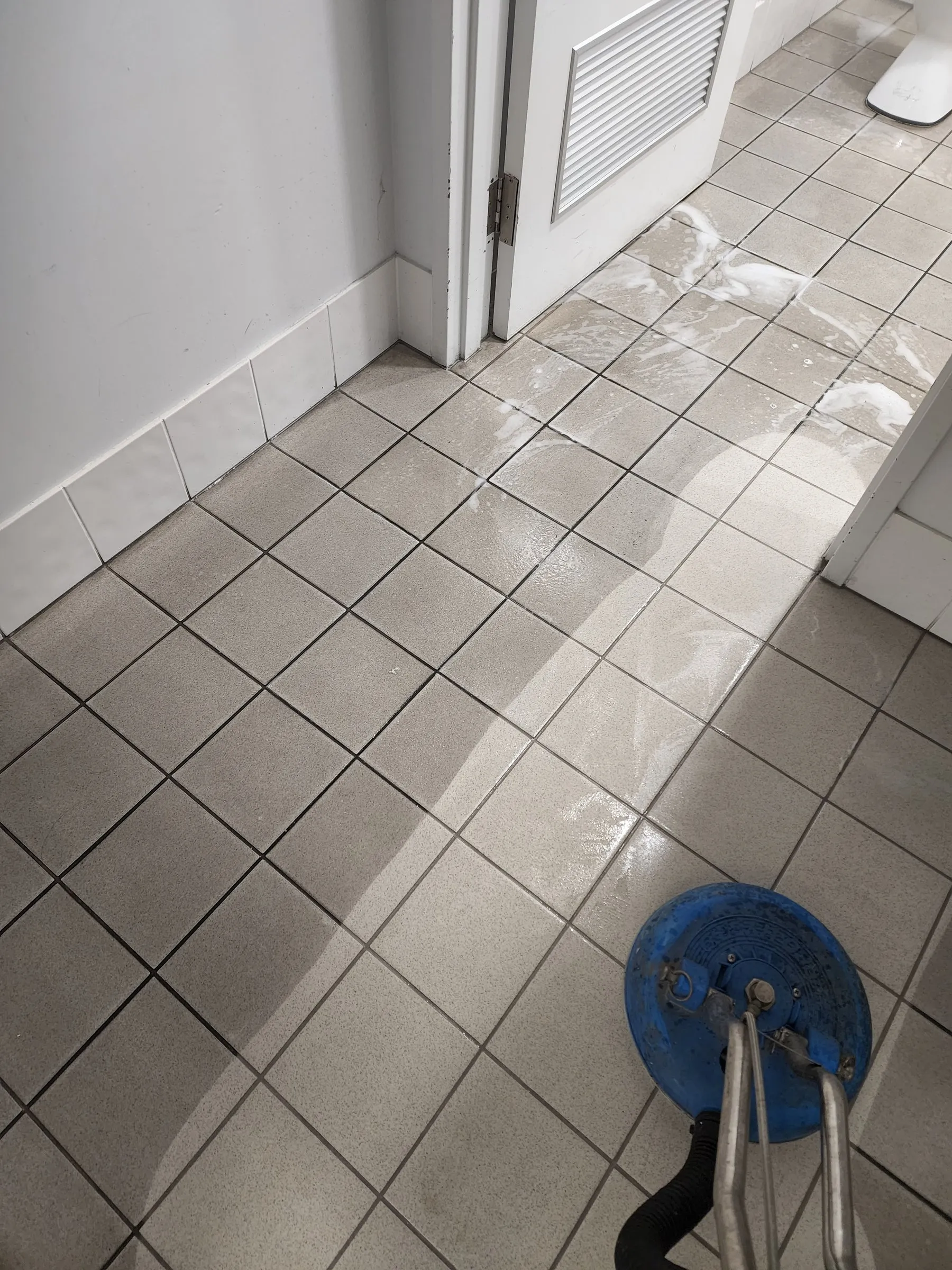
Every visit
Red is for washrooms.
Red cloths and red mops are used in washrooms and nowhere else, so nothing from a toilet ends up on a kitchen bench or a desk. Touch points get a sanitiser that is left on for its full contact time, then wiped off.

Washroom hygiene
Toilets, basins and floors cleaned, touch points sanitised, and paper, soap and liners kept in stock. Sanitary units are serviced on a set cycle through a licensed hygiene provider that we arrange.
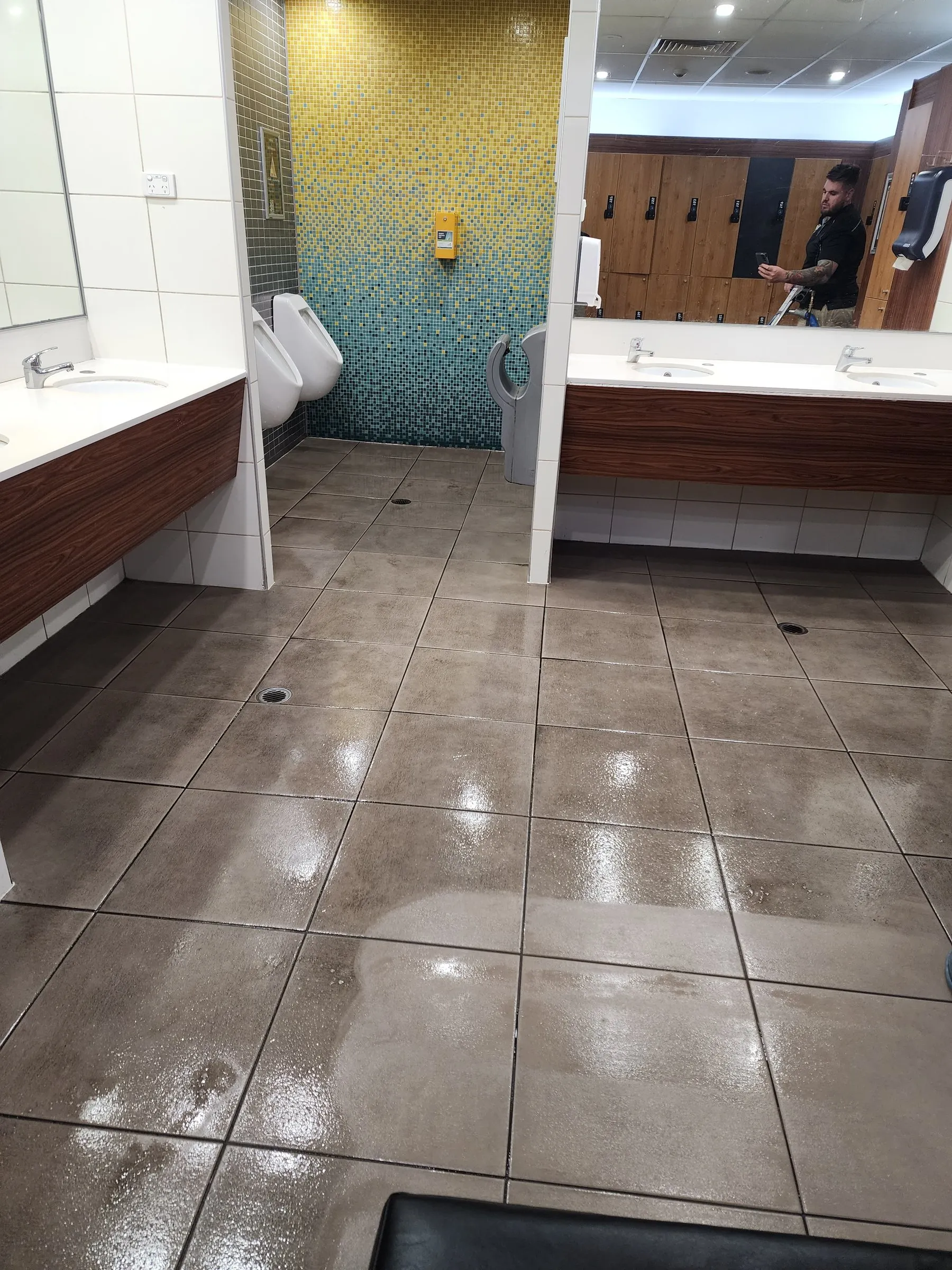
The scope
This is the standard clean. Your scope lists each washroom, the consumables and how often, so you can check every visit against it.
Every washroom clean
Common schedule
How we do it
Every visit
Red cloths and red mops are used in washrooms and nowhere else, so nothing from a toilet ends up on a kitchen bench or a desk. Touch points get a sanitiser that is left on for its full contact time, then wiped off.
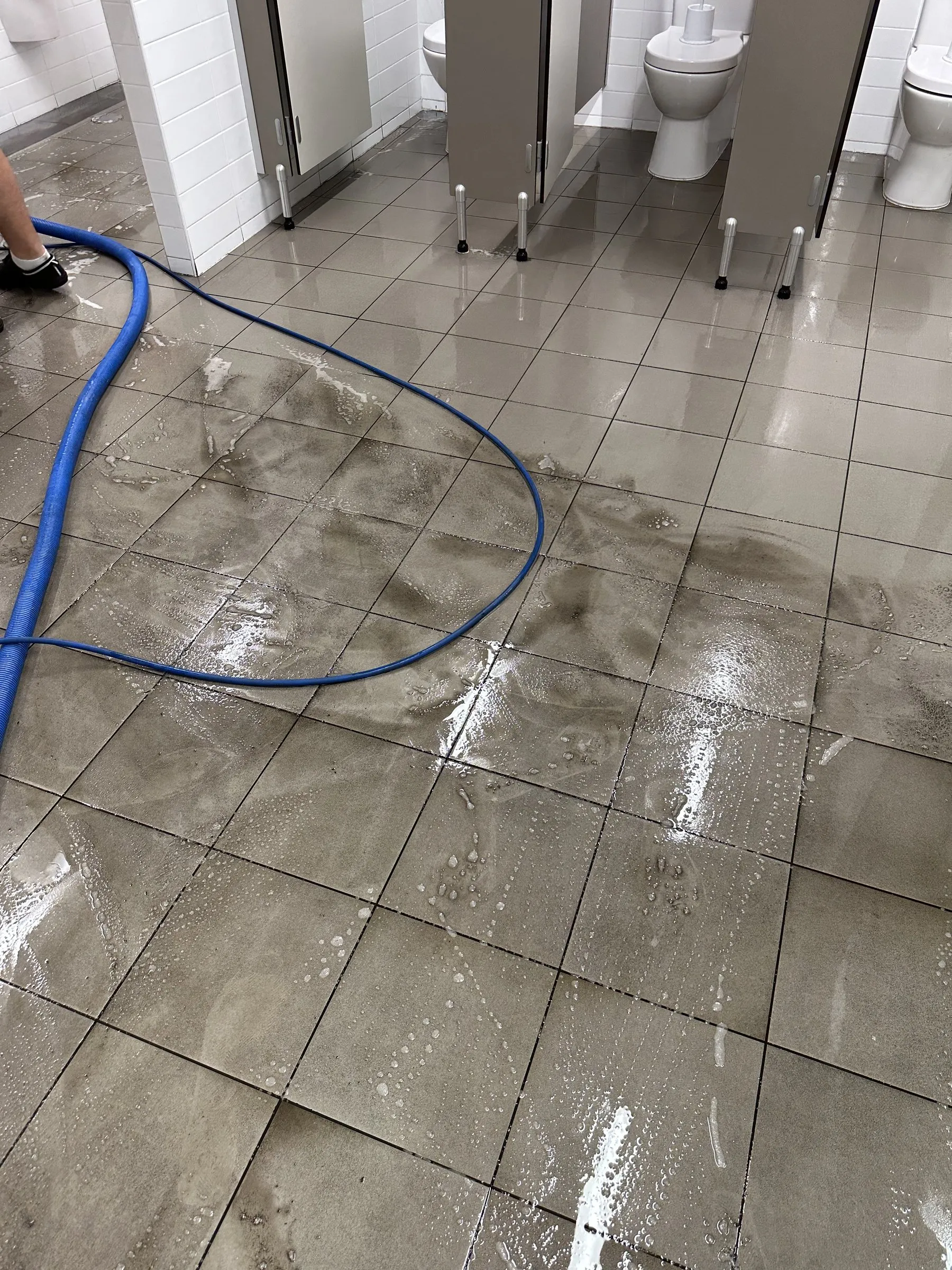
Floors and drains
Most washroom smell comes from floor wastes, urinal traps and grout, not from the air. Floor wastes are flushed, urinals get an enzyme treatment, and floors are scrubbed so urine doesn't build up in the grout lines around the pans.
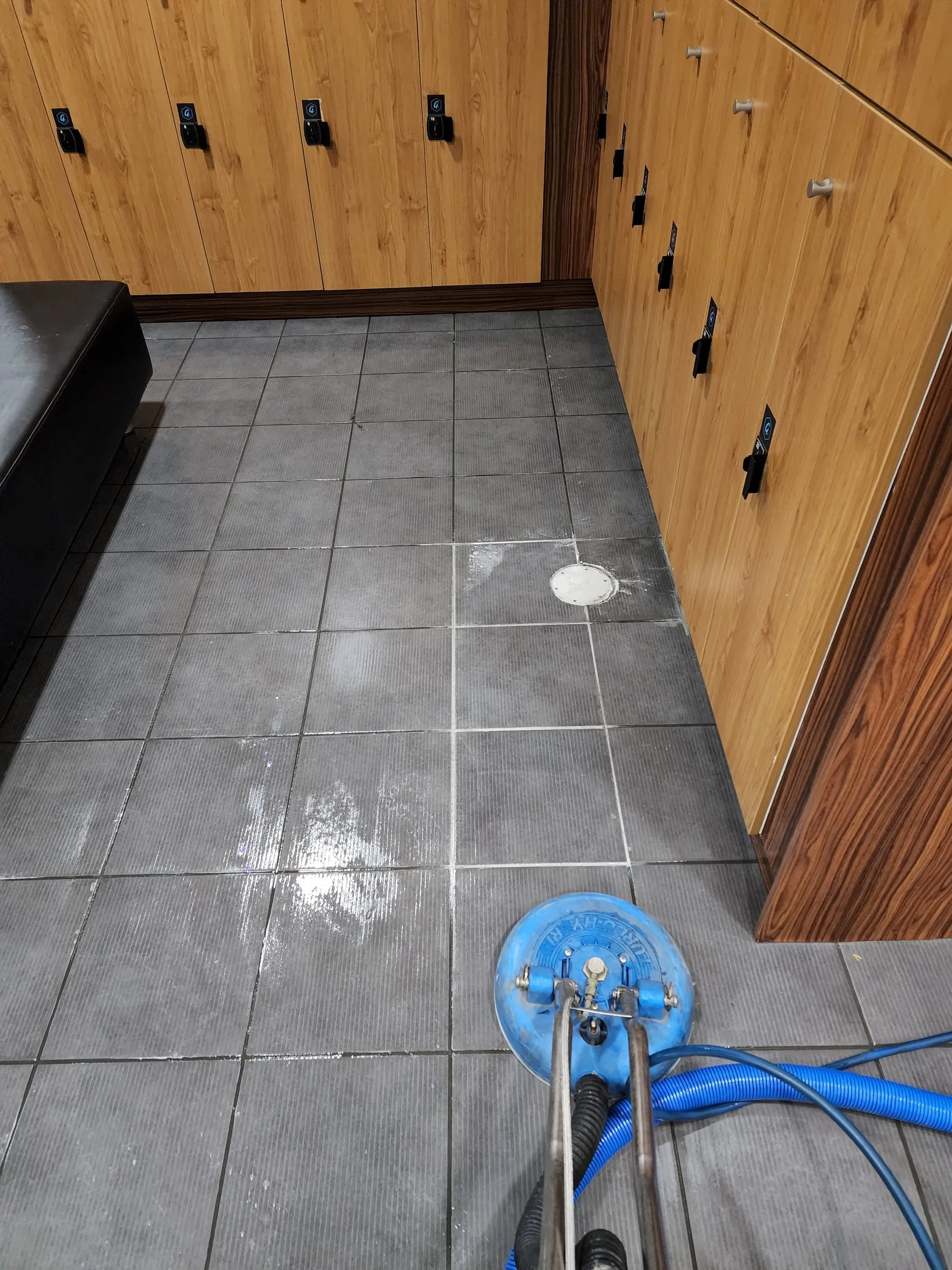
Supplies and units
Paper, soap and liners are supplied and topped up each visit, so a dispenser isn't empty by Thursday. Sanitary and nappy units are serviced on a set cycle by a licensed hygiene provider. We arrange that service, and it sits in the same scope.
Your scope
Set the size and the visits. You'll see the scope and the time on site; the price comes after the walk-through.
About a 25-desk office.
Draft scope
Office · 400 m² · 3 visits a week
Time on site, per visit
2.5–3 hrs
About 8 hours a week
Every visit
Scheduled
Hours, not a price. We price the scope after a 15-minute walk through the site. Or call (08) 6385 6664.
In and out
Time-stamped on arrival and when the visit closes.
Ticked
Each area marked done against the scope you signed off.
Photographed
The areas that matter, finished. Faults flagged with a photo.
Questions
Yes, if you want us to. Toilet paper, hand towel, soap and bin liners are supplied and stocked each visit, and they are listed in the scope so you can see what is used. If you already have a supplier, we stock the dispensers from your own storeroom instead.
Yes. Sanitary and nappy units are serviced through a licensed hygiene provider that we arrange, on a set cycle, usually every four weeks. You deal with one contact and one scope, and each service is recorded alongside the rest of the clean.
The smell is usually coming from underneath: a dry floor-waste trap, scale built up in a urinal, or urine soaked into the grout. A mop won't reach any of it, and air freshener only covers it. We flush the floor wastes, treat the urinals with an enzyme product and scrub the grout.
With colour coding. Red cloths and mops are for washrooms only, and they never go into kitchens, offices or treatment rooms. Touch points are sanitised with a product left on for its full contact time, and cloths are changed between rooms rather than rinsed and reused.
No. Sharps and clinical waste stay with a licensed collector, and we don't handle them. If you need sharps containers in your washrooms, your collector supplies and swaps them, and we clean around them. Anything found loose is left where it is and reported to you straight away.
A 15-minute walk-through of the washrooms, the consumables and the hours, then a written scope with the price.